Migration leader
Shiino
A senior Gabero leader who guided one branch through the Hausa lands and into Chad. He sought protection in Abéché and continued toward Sudan before dying near Kafia Kingi.
Welcome
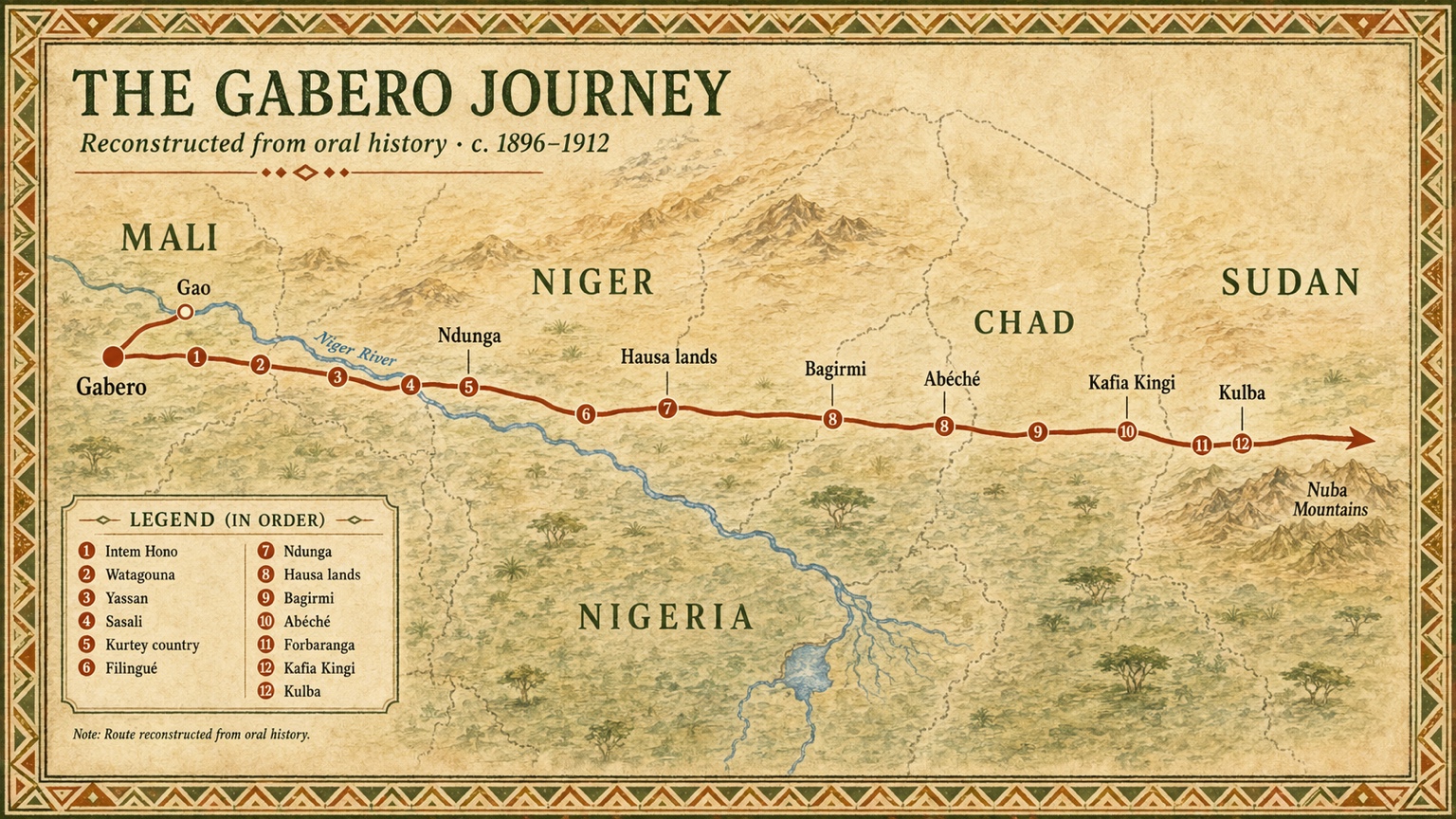
The Gabero Journey preserves the story of a Songhai-speaking Peul/Fulbe community with cultural ties to the Tuareg. Hailing from the Gao region of Mali, part of the community ultimately reached Sudan—thousands of miles away—after a journey that lasted almost fifteen years.
A diverse identity built through interaction and cultural exchange.
Use the sections below to explore origin, historic highlights and culture, then follow the journey stage by stage from Gabero to the Nuba Mountains.
The Gabero people
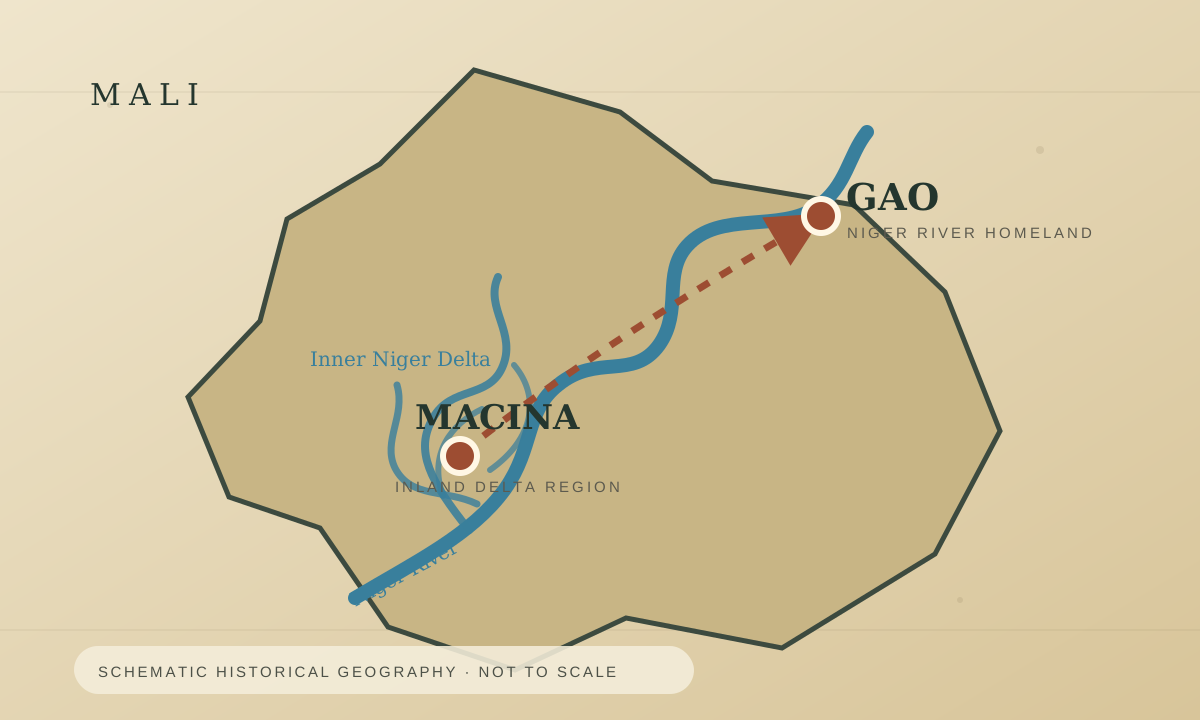
Macina → Gao
According to community tradition, Macina was a kingdom in central Mali founded by Maga Diallo, who migrated into the region around the fifteenth century. Macina was ruled by the Diallo clan and their Dicko warriors, known as the Ardo-Macina. One of the Ardo-Macina leaders, Chabibi Imamou Salihou, left Macina with his family, close relatives, students and supporters in search of a new land.
They reached the Gao region of northern Mali in the eighteenth century and settled near other Peul/Fulbe families in an area later named Gabero. The name is said to mean “Big Camp” in Songhai. One interpretation suggests that it began as a form of mockery because the community itself was small.
4 — Stop by stop
The route follows community narrative. Place-name spellings, exact locations and dates sometimes vary. Select a stage to reveal its remembered history.
Key Gabero figures
Names, titles and roles follow the community’s oral narrative.
Migration leader
Scholar known as Kozini
Mali · 1896
A regional crisis followed the assassination by Gabero men of the son of a leading political figure. Oral tradition identifies the victim as the son of a local Tuareg leader. At the same time, French troops were extending colonial control across much of Mali. In response to both political danger and foreign rule, religious scholars encouraged migration toward Muslim lands and ultimately the Holy Land. Families departed with livestock and household goods, following the Niger southeast. Oral accounts differ on whether the departure began in 1893 or 1896.

Sources & responsibility
Family testimony preserves names, meanings and experiences that colonial records often ignored. Scholarship supplies comparison and context. Neither should erase the other.

“Felgo”